
My work on VEGA @ KSP
· 5 min read
It’s been 6 months since I joined the Karman Space Programme as an Avionics Engineer. The last 6 months have seen me working on our Ground Software and our Sensor Stack. Both have gone through a few iterations, which I’d like to walk you through today.
A brief intro to VEGA
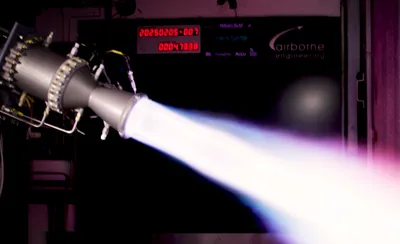
VEGA is KSP’s first liquid rocket, and has been in the works for a few years now. It’s the 3rd rocket in a line of 4 called the NOVA series (Nebula, Orion, Vega, Aurora).
It’s a huge rocket (8m in length), using Isopropyl Alcohol (IPA) as it’s propellant and Liquid Oxygen (LOX) as it’s oxidizer. Liquid Rockets present an interesting challenge for Avionics teams - feed-system valves, pressure & temperature sensors, reliable communication between nodes and the Flight Computer, physical requirements such as vibration and temperature, communication on the ground and in the air, ground system development and more!
The engine you see here our Cactus Engine, giving us 7.4kN of thrust. You can view our hot-fire footage on YouTube thanks to Nikon SLM.
Ground Software
The very first system I worked on at KSP was the Control UI for VEGA, which at the time was responsible for a limited set of tasks: displaying Pressure Transducer (PT) and Thermocouple (TC) readings, controlling and displaying valve states and displaying kinematics data.
Initial Design
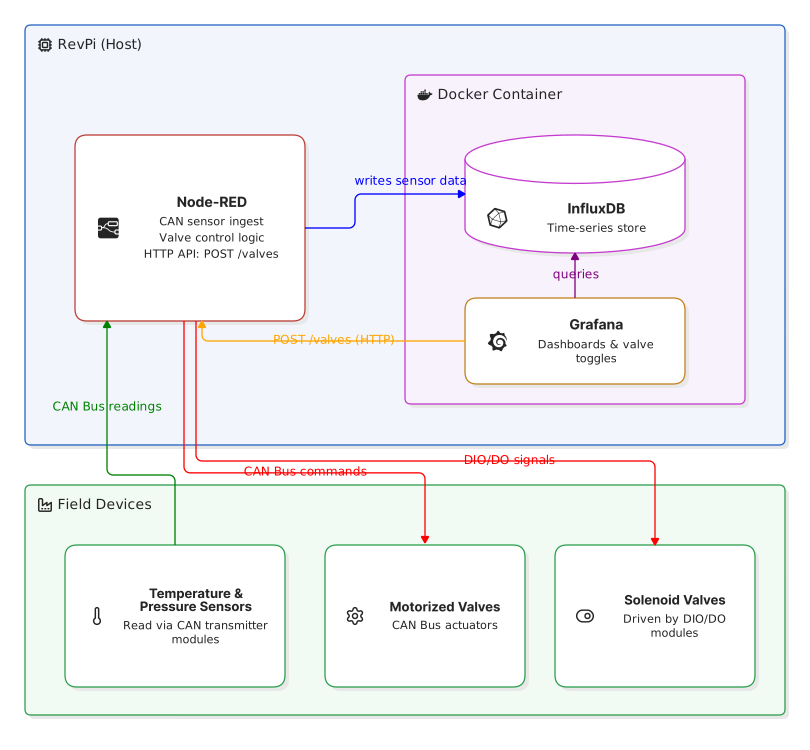
The initial design of our Ground Software was an off-the-shelf solution, piecing together Grafana and Influx DB for the dashboard, running within a Docker container, which communicated with a Node-Red instance, a block programming tool for event-driven software.
Grafana and InfluxDB are a pair - Grafana is our UI which is constantly pulling time-series data from InfluxDB at set time intervals.
Node-Red is purely event-driven software, reacting to certain signals. An example of this is an HTTP POST /valves sent from the Grafana server whenever we clicked a button to toggle the state of a valve.
All of this ran on a Revolution Pi Connect 5 - an industrial Raspberry Pi 5 with, importantly, two CAN Buses. Yes, a Raspberry Pi on a rocket running full Ubuntu Linux. Wild?!
This software ran on our Ground Station Equipment (GSE) and the idea was for the GSE RevPi to expose its own network that we could connect to and open the Grafana dashboard in a web browser.
This was a fantastic solution at the time. We had zero core software to maintain for the Ground System Equipment (GSE), and could instead focus all our attention on the actual Vehicle software.
There is a down-side, however, to off-the-shelf, generic pieces of software. We had minimal control, and often found ourselves fighting Grafana a little to get an intuitive, easy to use UI going as requirements grew. Growing requirements led to more UI components and different networking requirements, ultimately leading to my decision to just build a custom UI.
Current Design
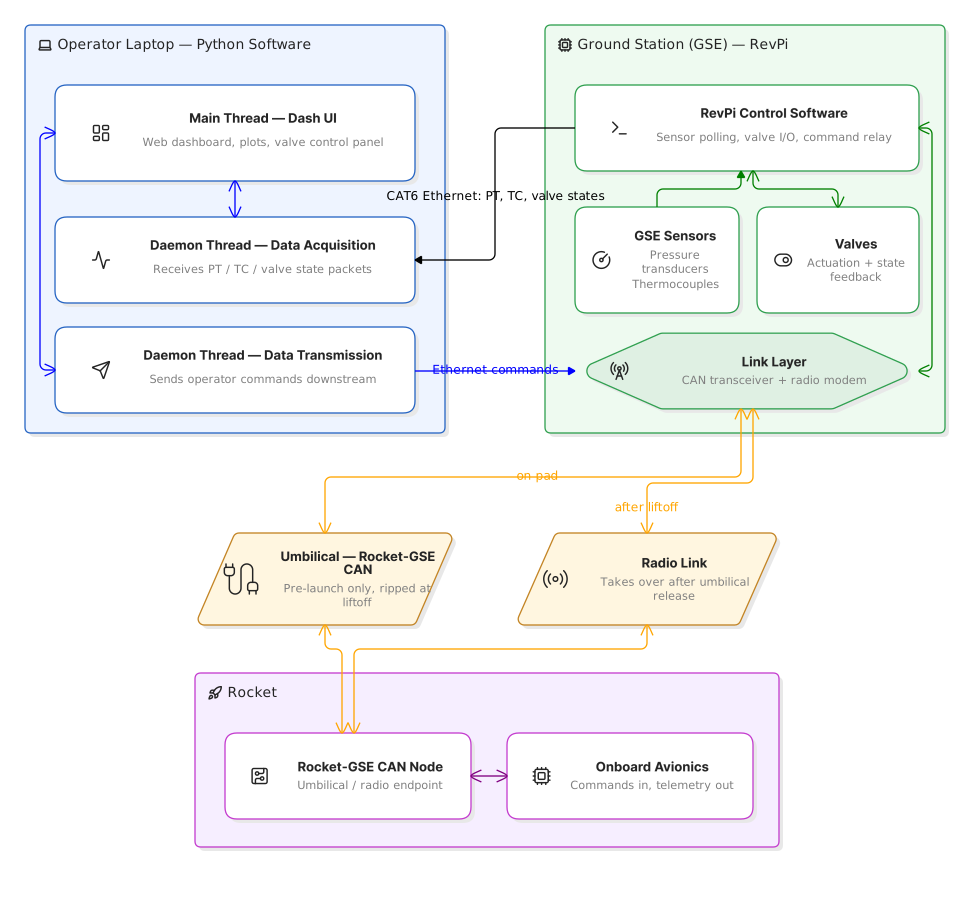
The new, current design of our GSE software is definitely a lot more involved, but allows us complete control over the exact networking and UI. While the diagram isn’t fully representative of everything, it should give you a good idea of how the system now works.
There is now a main UI software, purely responsible for displaying telemetry data and dispatching actuation commands to the Rocket or GSE. This runs on a laptop with us in the Bunker at FAR, connected via a CAT6 Ethernet cable to our GSE RevPi. The UI has 3 threads, a main UI thread running dash, a Data Acquisition Thread reading telemetry over the Ethernet link, and a Data Transmission Thread, publishing actuation commands from the UI. Communication between the threads is handled with last-value buffers (DAQ) and queues (DTM).
This design also incorporates some fixes that our previous design assumed. The previous design assumed we’d be able to connect to the RevPi’s LAN from the FAR bunker. I don’t know why we ever assumed that would be possible - we now use a wired CAT6 Ethernet link communicating over ZeroMQ channels.
Sensor Stack
I’ve spent a huge amount of time on our sensors - our Pressure Transducers and Thermocouples. Our PTs are read via a standard 4-20mA current loop configuration. Easy right? Well, PTs have caused us immense issues during cold-flows, and they have consistently failed on us in the past.
This has historically been attributed to atrocious wiring and the additional complexity that came with powering our hardware of choice.
Pressure Transducers

Our initial design comprised of some WaveShare RP2350 CAN boards that are effectively Pico 2’s with CAN Bus Transceivers on them. Our PTs were wired with shunt resistors, connected to 3 ADCs on the WaveShare board meaning we needed one WaveShare board per 3 PTs. On top of this, the boards were powered with 5V, but VEGA has a 12V/24V Bus, meaning we needed bulky buck converters to step down the voltage. This created multiple points of failure, one with power and one with the WaveShare board itself.
We shifted to using a CAN IO PLC module. This is a high voltage module with CAN Bus and a bunch of voltage ADCs. There are models of the module with 4-20mA current inputs but we received the model without them. No big deal, we just stuck to using shunt resistors.
Thanks to 9-30V voltage range, we were able to remove the buck converters for the waveshares. We were also able to use just a single CAN IO module. Huge wins!
Thermocouples

Our original Avionics stack involved fully custom boards using a MAX31855 ADC for the micro-volt read outs from the TCs. During the revamp of our Pressure Transducer design, our new sponsor Control Technologies pointed us to some great CANmod.temp modules.
These possess some of the same benefits as the CAN IO PLC module - no extra power electronics required, just tie straight to main power bus plus native CAN Bus without extra hardware. What more can you really ask for?
What’s next?
VEGA is due to be launched in a few weeks from the time of writing from the Friends of Amateur Rocketry launch site out in the Mojave Desert. At the time of writing, VEGA is already in Texas being prepped for launch. Ad Astra.